

Tooth pain has a way of demanding your full attention. Whether it woke you up at 2 a.m. or crept in during your lunch break, a toothache doesn’t wait for a convenient moment. The good news? There are practical steps you can take right now to get some relief and identify the clear signs that tell you it’s time to stop managing it at home and pick up the phone.
This guide is for people right here in Midwest City, OK, who want honest, no-nonsense answers about what to do when a tooth starts hurting.
Why Toothaches Happen in the First Place
Before reaching for relief, it helps to understand what’s going on. Most toothaches stem from a handful of common causes: tooth decay, a cracked or chipped tooth, an exposed root due to gum recession, a loose or lost filling, or an abscess, a bacterial infection at the root of the tooth.
That last one, the abscess, is the one you need to take most seriously. Left untreated, dental infections can spread to the jaw, neck, or even the brain. According to the American Dental Association, dental infections are among the leading causes of emergency room visits in the U.S. each year — a problem that’s largely preventable with timely care.
If you’re in Midwest City and experiencing severe, persistent, or worsening tooth pain, connecting with an emergency dentist in Midwest City sooner rather than later is almost always the right call.
Home Relief Options That Actually Work
For mild to moderate tooth pain, these approaches can provide real comfort while you wait for a dental appointment.
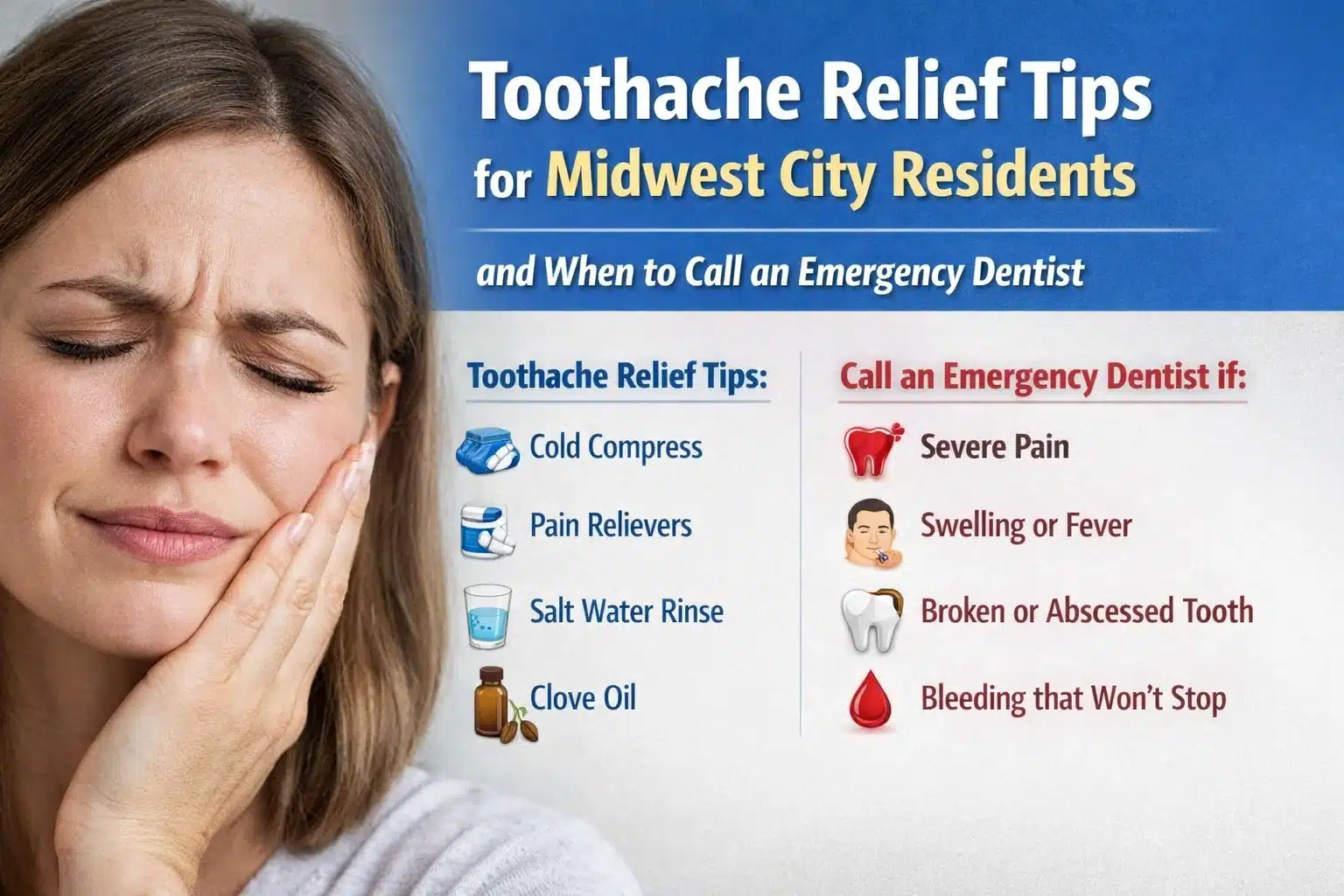
- Clove oil has been used for centuries as a natural numbing agent. It contains eugenol, a compound with legitimate anesthetic and antibacterial properties. Apply a small amount to a cotton ball, then gently place it on the affected area. Don’t overdo it — undiluted clove oil can irritate gum tissue if used too much.
- Cold compresses are underrated. Placing an ice pack wrapped in a cloth against your cheek for 15 to 20 minutes can reduce swelling and numb the area. This is especially useful when the pain is coming from trauma – a knocked or cracked tooth, for instance.
- Over-the-counter pain relievers like ibuprofen (Advil, Motrin) work well for dental pain because they reduce both pain and inflammation. Acetaminophen (Tylenol) is also helpful, particularly if you can’t take NSAIDs. Follow the label dosing instructions and never place an aspirin tablet directly on your gum — a common misconception that can chemically burn the tissue.
- Warm saltwater rinses help reduce bacteria in the mouth and can ease gum irritation surrounding a painful tooth. Mix 1/2 teaspoon of salt into 8 ounces of warm water, then rinse gently for 30 seconds.
These options help manage discomfort. They don’t fix the underlying problem, and that distinction matters.
Signs You Need More Than Home Care
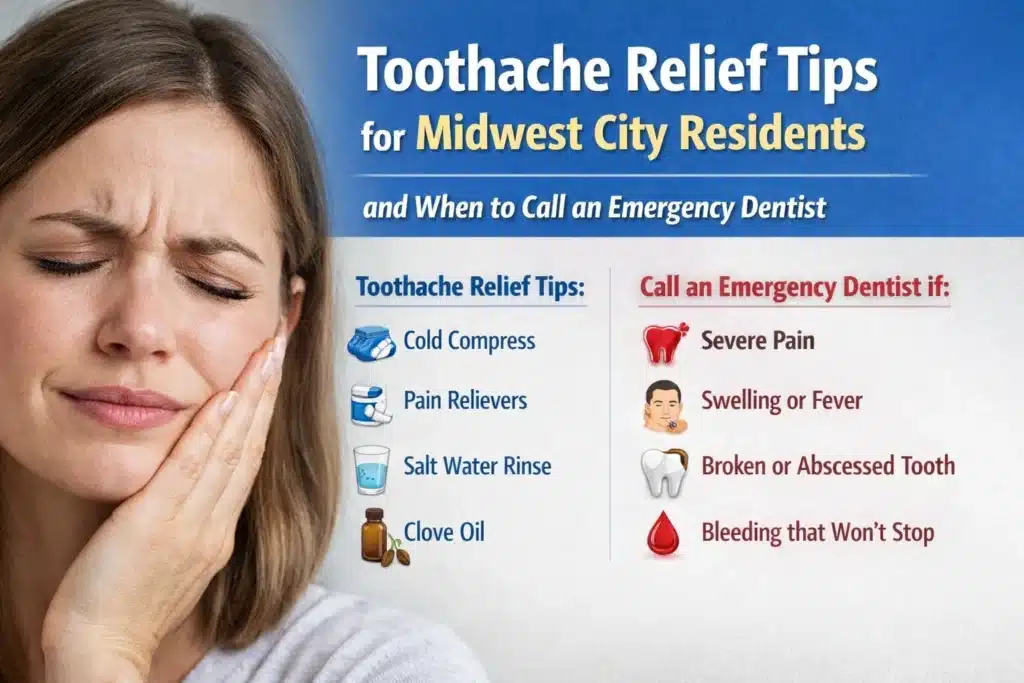
Some symptoms are your body’s way of telling you that this isn’t something to sleep off. Watch for:
- Swelling in the jaw, cheek, or neck — this can signal an abscess that may be spreading
- Fever alongside tooth pain — another warning sign of infection
- Pain that’s constant, throbbing, and getting worse — not fluctuating, not mild, but relentless
- A tooth that’s been knocked out or broken — timing matters enormously here
- Pain when biting down or sensitivity that doesn’t fade — could point to a cracked tooth or dying nerve
- Pus or a bad taste in your mouth — strong indicators of infection
If any of these apply to you, this is when reaching out to an emergency dentist in Midwest City becomes urgent. Dental emergencies don’t always look dramatic, but they can escalate quickly.
What Happens at an Emergency Dental Visit
Many people hesitate to call because they’re not sure what to expect, or they assume emergency dental care is wildly complicated. It’s usually not.
At an emergency visit, the dentist will first assess the cause of your pain — often through a brief exam and an X-ray. From there, the approach depends on the issue. A cracked or chipped tooth may be stabilized with bonding or a temporary crown. An abscess typically requires either a root canal or extraction, along with antibiotics to treat the infection. A knocked-out tooth can sometimes be re-implanted if the dental office is reached quickly enough — ideally within 30 to 60 minutes.
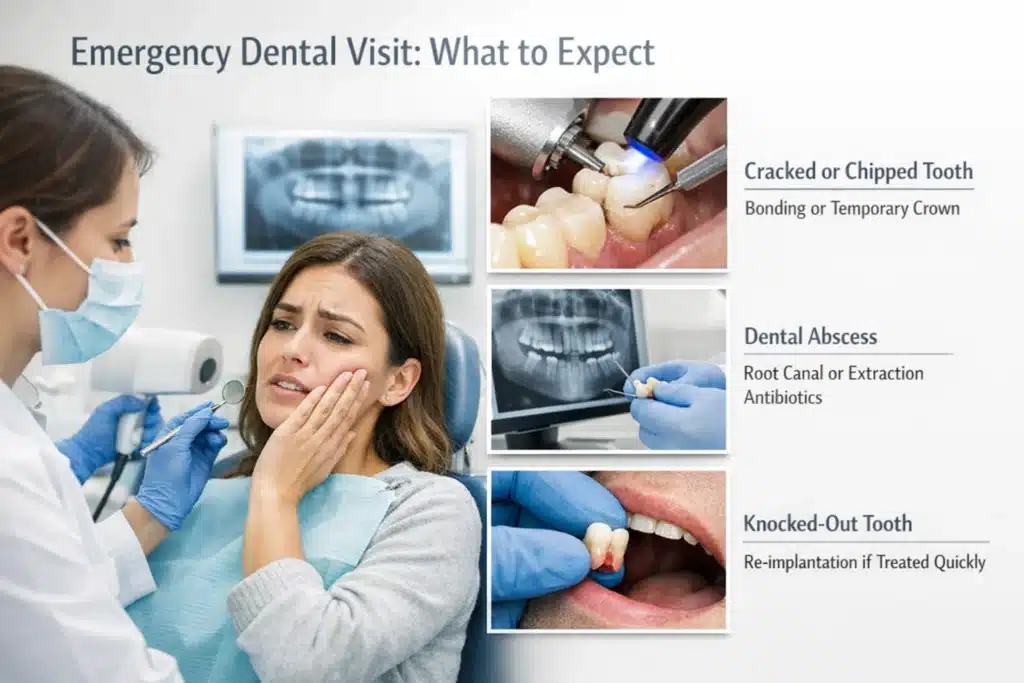
At Midwest Smiles – Dentist Midwest City, the focus is on getting you out of pain efficiently and treating the source of the problem, not just the symptom.
Don’t Wait Until It Gets Worse
Tooth pain has a way of getting more complicated the longer it’s ignored. If you’re dealing with discomfort that isn’t improving or symptoms that are clearly escalating – Midwest Smiles – Dentist Midwest City is here to help. Book your appointment today and get the relief you need from a team that genuinely understands what you’re going through.
People Also Ask About Toothache Relief
Can a toothache go away on its own?
Mild tooth sensitivity may be faded if it is caused by a temporary factor, such as irritated gum tissue or a minor crack. But if pain persists beyond a day or two, or is severe from the start, it won’t go away without treatment.
What should I do if my tooth gets knocked out?
Pick it up by the crown (not the root), rinse it gently without scrubbing, and try to place it back in the socket or keep it moist in milk or saliva. Get to a dentist within an hour for the best chance of saving the tooth.
Is dental pain ever a sign of something other than a tooth problem?
Yes. Sometimes pain in the upper back teeth can be related to sinus pressure. Jaw pain can sometimes be linked to TMJ issues or even cardiac events, which is another reason to take persistent, unusual facial or jaw pain seriously.
How do I know if I have a dental abscess?
Common signs include a persistent throbbing ache, swelling, fever, a bad taste in the mouth, and sometimes a visible pimple-like bump on the gum near the painful tooth.
Can I eat normally with a toothache?
Stick to soft foods and avoid temperature extremes – both very hot and very cold foods can trigger sharp pain. Chew on the opposite side of your mouth and avoid hard, crunchy, or sticky foods until you’ve been treated.