


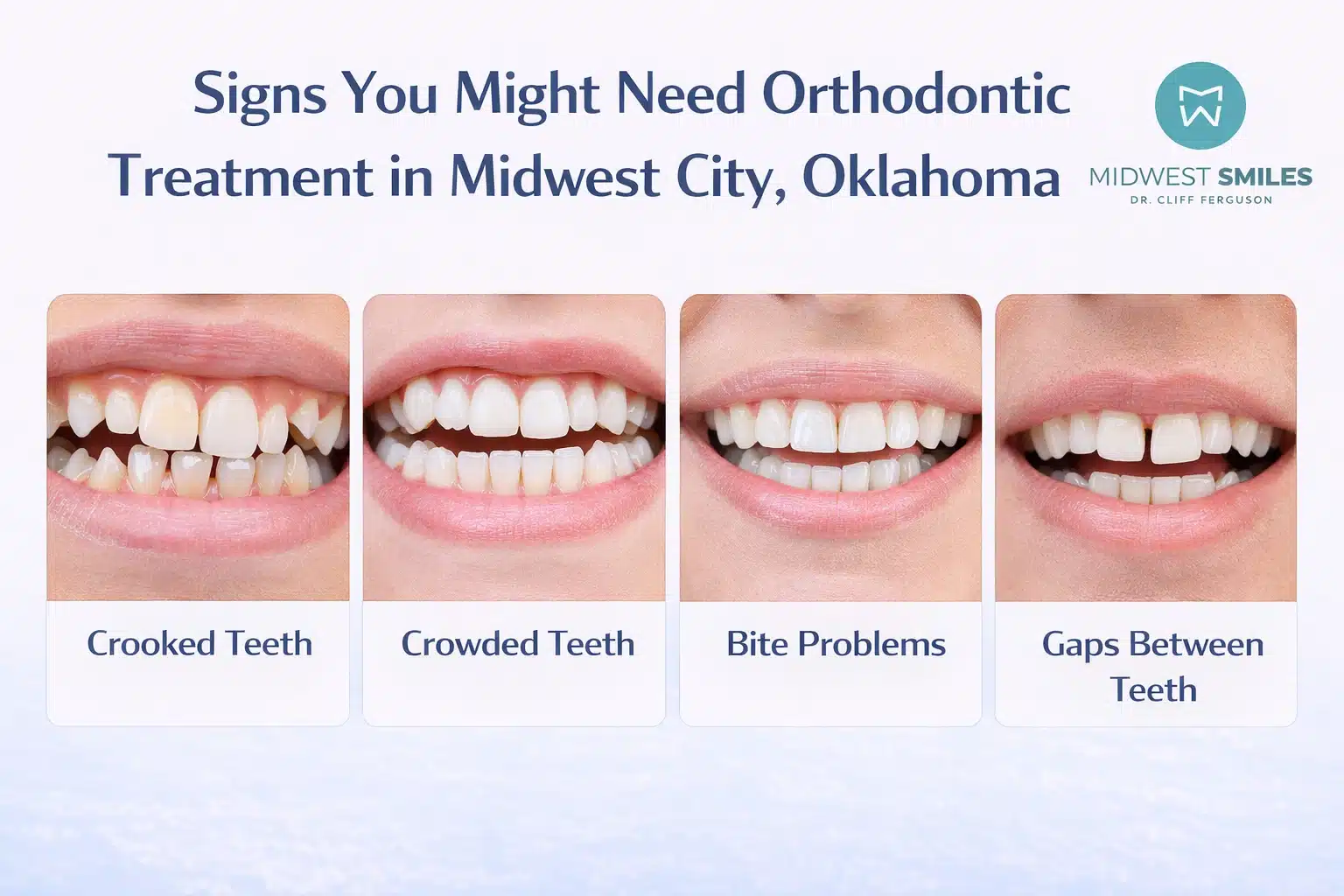
Many people delay braces or orthodontic treatment because they believe it is only for teenagers. In reality, teeth alignment issues can appear at any age and may affect more than just appearance. When teeth do not line up properly, they can interfere with chewing, speech, and long-term oral health.
Residents around Midwest City often notice small signs during everyday moments. You might feel discomfort while enjoying dinner with family, notice uneven teeth in school photos, or feel your bite shifting while talking with friends at community events near Joe B. Barnes Regional Park or Town Center Plaza. These changes can sometimes signal deeper alignment concerns.
Many people are unaware that certain warning signs may indicate the need for orthodontic treatment. Understanding these signs early can help prevent more complicated dental problems later. In this blog, we will explore common indicators that Midwest City residents should watch for and when it may be time to consult a professional.
Why Teeth Alignment Matters for Long-Term Oral Health
Teeth are designed to work together in a balanced bite. When they align correctly, they distribute chewing pressure evenly across the mouth. This balance helps protect the enamel, supports healthy jaw movement, and allows teeth to function efficiently during daily activities like eating and speaking.
When teeth become misaligned, several problems may begin to develop. Some people experience uneven wear on certain teeth because pressure is not distributed evenly. Others may notice jaw discomfort, headaches, or fatigue in the jaw muscles after chewing.
Misalignment can also make it harder to clean between teeth properly, increasing the risk of plaque buildup and cavities. Over time, these small issues can gradually affect overall oral health.
Orthodontic treatment focuses on correcting these alignment problems early. By guiding teeth into healthier positions, dental professionals can improve bite function, reduce unnecessary strain on the jaw, and make daily oral hygiene easier. Addressing alignment concerns sooner rather than later can help protect teeth and gums for many years.
7 Signs You Might Need Orthodontic Care
Crowded or Overlapping Teeth
Crowded teeth are one of the most noticeable alignment concerns. When teeth appear stacked, rotated, or pushed together, it often means there is not enough space in the jaw for proper alignment. This can make brushing and flossing difficult because certain areas become hard to reach. Over time, trapped plaque and food particles may increase the risk of cavities and gum irritation.
Large Gaps Between Teeth
Spacing between teeth can sometimes appear naturally, but larger gaps may signal a bite imbalance. These spaces can affect how teeth meet during chewing and may even cause certain teeth to shift over time. In many cases, gaps occur because the jaw size and tooth size do not match perfectly.
Frequent Biting of Cheeks or Tongue
If you often bite the inside of your cheek or tongue while eating, it may indicate that your teeth are not aligned properly. Misaligned teeth can create awkward bite patterns that cause soft tissues in the mouth to get caught between teeth.
Difficulty Chewing or Biting Food
Some individuals notice discomfort when chewing certain foods. This can happen when the upper and lower teeth do not meet evenly. When a bite is uneven, chewing becomes inefficient and can strain specific teeth or jaw muscles.
Jaw Pain, Clicking, or Popping
Jaw discomfort, clicking, or popping during movement may indicate a bite imbalance. These symptoms sometimes occur when the jaw joint compensates for misaligned teeth. Over time, this additional strain can cause tension or discomfort around the jaw.
Teeth That Protrude Forward
Teeth that extend outward beyond their normal position may affect both function and protection. Protruding teeth can be more vulnerable to injury during sports or accidental impacts. They may also interfere with proper lip closure.
Early or Late Loss of Baby Teeth
For children, the timing of baby tooth loss plays an important role in how permanent teeth develop. When baby teeth fall out too early or remain longer than expected, it can affect the eruption path of adult teeth. Monitoring these changes can help guide proper alignment as the child grows.

Orthodontic Issues Adults Often Ignore
Many adults assume alignment care is only for younger patients. However, teeth naturally shift throughout life due to aging, grinding, or changes in jaw structure. Some adults notice crowding that was not present in their teenage years, while others experience bite changes that develop gradually.
These shifts may lead to discomfort, uneven tooth wear, or difficulty maintaining oral hygiene. As awareness grows, more adults now explore orthodontic treatment in Midwest City, Oklahoma, USA, to improve their bite and long-term dental health. Modern treatment methods and digital planning have also made alignment correction more accessible for adults who previously avoided it.
At Midwest Smiles – Dentist Midwest City, many patients discover that addressing alignment concerns later in life can still make a meaningful difference in their oral health.
When Parents Should Consider an Orthodontic Evaluation for Their Child
Children’s teeth and jaws develop quickly, which makes early observation important. Parents may notice subtle habits or behaviors that could influence how teeth develop.
For example, frequent mouth breathing may affect jaw development. Thumb sucking that continues beyond early childhood can also influence tooth alignment. Some children struggle to pronounce certain sounds clearly due to bite positioning. Others may exhibit jaw shifting when opening or closing their mouths.
Early evaluation helps professionals monitor these patterns and guide proper tooth development. Even if immediate treatment is not necessary, regular observation can help ensure that permanent teeth erupt in healthier positions as the child grows.
What Happens During an Orthodontic Consultation
An orthodontic consultation typically begins with a detailed bite examination. The dental professional evaluates how the upper and lower teeth come together and checks for signs of crowding, spacing, or jaw imbalance.
Digital imaging or scans may be taken to analyze the position of teeth beneath the gums. These images help identify alignment issues that may not be visible during a routine visual examination.
After reviewing the findings, the dental professional explains the treatment plan and discusses possible alignment options. Patients also receive information about expected timelines and care recommendations. This step helps individuals understand their condition clearly before deciding on treatment.

Everyday Habits That Can Worsen Alignment Problems
Certain daily habits may contribute to worsening alignment issues over time. While some behaviors begin in childhood, others develop gradually in adulthood.
Prolonged thumb sucking is one habit that may affect the positioning of developing teeth. Teeth grinding, often caused by stress or nighttime clenching, can also gradually shift tooth alignment. Chewing hard objects like ice may place unnecessary pressure on teeth and bite structure.
Poor oral hygiene can allow plaque buildup, which weakens the supporting structures around teeth. In addition, untreated missing teeth can cause adjacent teeth to shift into the gap.
Being aware of these habits allows individuals to make small adjustments that support healthier alignment over time.
Benefits of Addressing Alignment Issues Early
Correcting alignment concerns early offers several health benefits. One major advantage is improved bite function. When teeth meet evenly, chewing becomes more efficient and comfortable.
Proper alignment also makes brushing and flossing easier. This improves access to areas that may otherwise trap plaque and bacteria. As a result, individuals may reduce their chances of developing cavities or gum irritation.
Another benefit is reduced jaw strain. When the bite is balanced, the jaw muscles do not need to compensate for uneven pressure. This can help prevent tension or discomfort in the jaw joint.
Balanced tooth alignment also supports greater overall harmony in the smile and bite.
Recognizing the early signs of alignment issues can help prevent more complex dental concerns later. Crowded teeth, spacing issues, jaw discomfort, and difficulty chewing may indicate that the bite requires professional evaluation.
Ignoring these signs may allow minor problems to progress into larger issues affecting long-term oral health. Addressing them early often leads to better outcomes and improved comfort.
If you or a family member notices any of these warning signs, consider seeking guidance from a professional. The team at Midwest Smiles – Dentist Midwest City provides detailed evaluations to help residents understand their dental alignment and available care options. Taking that first step can help protect your oral health and restore confidence in your smile.
People Also Ask
At what age should someone first see an orthodontic professional?
Children should have their first orthodontic evaluation around age seven. Early checks help identify jaw growth issues and guide permanent teeth into healthier positions.
Can jaw pain be related to teeth alignment problems?
Yes, bite imbalance can place stress on the jaw joint. This strain may cause clicking sounds, headaches, or discomfort during chewing or speaking.
Why do teeth become crowded over time?
Teeth may shift due to aging, pressure from surrounding teeth, or changes in jaw structure. This movement can gradually create crowding even in adults.
Can teeth alignment affect oral hygiene?
Yes, crowded or overlapping teeth make brushing and flossing harder. This can increase plaque buildup and raise the risk of cavities and gum irritation.
How long does orthodontic treatment usually take?
Treatment length varies depending on the alignment issue. Many cases take between 12 and 24 months, though some may require shorter or longer timelines.