

Teeth Whitening Midwest City: Myths vs. Facts You Should Know
If you’ve been curious about teeth whitening in Midwest City, you’re not alone. With graduation season here and summer just around the corner, many patients want a brighter smile fast. But a lot of misinformation exists about whitening treatments. Dr. Cliff Ferguson and the team at Midwest Smiles want to help you separate fact from fiction so you can make the best decision for your smile.
Myth: Teeth Whitening Damages Your Enamel
This is one of the most common concerns we hear. Many people believe whitening strips or professional treatments wear down tooth enamel permanently. The truth is a bit more nuanced.
Professional whitening products use hydrogen peroxide or carbamide peroxide in carefully controlled concentrations. These ingredients lift stains from within the tooth without removing enamel. Studies consistently show that professionally supervised whitening is safe for tooth structure.
The key word is professional supervision. Overusing over-the-counter products without guidance can cause sensitivity. That is why working with a dentist like Dr. Ferguson makes such a difference for long-term results and safety.
- Professional-grade gels are formulated to minimize sensitivity
- Custom trays distribute the gel evenly across each tooth
- Your dentist monitors the process to protect your gum tissue
- Treatment plans are adjusted based on your individual enamel strength
Myth: All Whitening Products Give the Same Results
Walk down any pharmacy aisle and you will find dozens of whitening toothpastes, strips, and rinses. It is easy to assume they all work the same way. They do not.
Over-the-counter products contain much lower concentrations of active whitening agents. They can brighten surface stains slightly. But they rarely reach the deeper, intrinsic discoloration that builds up over years of coffee, tea, or certain medications.
Professional teeth whitening in Midwest City at our office uses higher-strength formulas and custom-fitted trays. The results are more dramatic and longer-lasting. If you want a genuinely noticeable change before a graduation photo or a summer event, professional treatment is the more reliable option.
Myth: Whitening Works on Crowns, Veneers, and Fillings
This is a fact many patients do not know until after they start whitening. Bleaching agents only work on natural tooth structure. They do not change the color of dental restorations.
Crowns, veneers, bridges, and composite fillings are made from materials that do not respond to peroxide. If you whiten your natural teeth, those restorations may end up looking noticeably different in shade. That can create a mismatched appearance.
Before starting any whitening treatment, talk to your dentist about existing restorations. Dr. Ferguson can help you plan a realistic outcome. In some cases, updating older restorations after whitening creates a perfectly uniform smile.
- Natural enamel responds to peroxide-based whitening
- Porcelain and composite materials do not bleach
- Existing restorations may need to be replaced to match your new shade
- A dental consultation helps you plan the full picture ahead of time
Myth: Teeth Whitening Causes Permanent Sensitivity
Tooth sensitivity after whitening is real. But the word permanent is where this myth goes wrong. For most patients, sensitivity is temporary and mild.
Whitening agents can temporarily open tiny pores in enamel called dentinal tubules. This makes teeth more responsive to temperature changes for a short time. The sensation typically fades within 24 to 48 hours after treatment.
There are easy ways to manage it. Dentists often recommend using a sensitivity toothpaste for a week before treatment. Taking short breaks between whitening sessions also helps significantly. Patients with pre-existing sensitivity should let Dr. Ferguson know before starting so a gentler protocol can be used.
Here in Midwest City, spring and early summer bring lots of cold drinks and ice cream. A little planning ahead keeps post-whitening sensitivity from getting in the way of enjoying the season.
Myth: Once You Whiten, Results Last Forever
We wish this were true. Unfortunately, teeth naturally re-stain over time. Food, beverages, and habits like smoking all contribute to gradual discoloration. No whitening treatment is truly permanent.
That said, results from professional whitening can last one to three years with proper care. Simple habits make a big difference. Rinsing with water after coffee or tea helps. Brushing twice daily and scheduling regular preventive dental cleanings at Midwest Smiles keeps your smile looking its best longer.
Touch-up treatments are also an option. Many patients do a quick whitening refresh once or twice a year. This is far less intensive than a full initial treatment and keeps results looking fresh year-round.
What to Expect During a Professional Whitening Visit
If you have never had professional teeth whitening, knowing what to expect makes the experience much less intimidating. The process is straightforward and comfortable for most patients.
- Dr. Ferguson or a team member evaluates your teeth and gum health first
- A protective barrier is applied to shield your gums from the whitening gel
- The whitening agent is applied directly to your teeth in controlled amounts
- Custom trays are provided for at-home maintenance if needed
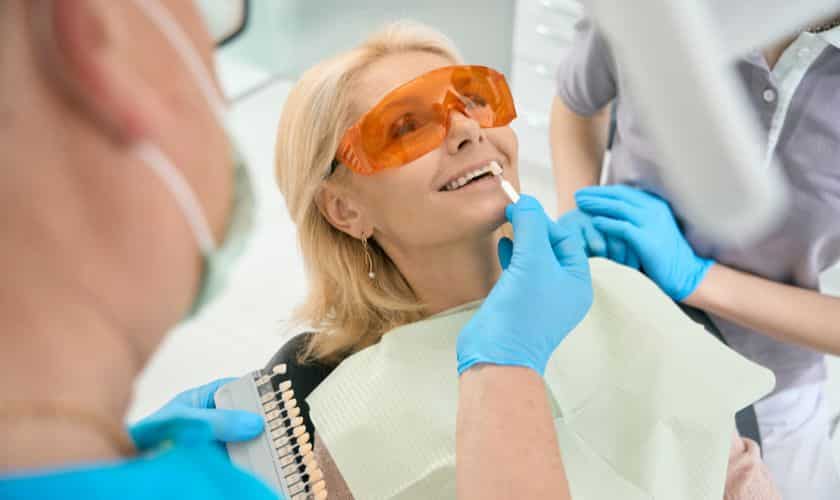
- A final shade comparison shows you exactly how much brighter your smile is
The entire in-office visit usually takes about 60 to 90 minutes. Most patients see a noticeable difference after just one session. Results continue to develop over the following 24 to 48 hours.
If you are curious about whether whitening is right for your specific situation, our team is happy to walk you through your options. You can reach out to schedule a consultation with Dr. Ferguson at any time.
Is Teeth Whitening Right for You?
Professional whitening works best for patients with healthy teeth and gums who have extrinsic or mild intrinsic staining. It is not recommended for patients who are pregnant, have untreated cavities, or have severely sensitive teeth without prior evaluation.
The best first step is always a conversation with your dentist. Dr. Ferguson takes the time to understand your smile goals before recommending any treatment. That approach ensures you get results you feel good about without unnecessary discomfort.
Midwest Smiles serves families throughout Midwest City, OK, with a full range of dental services. Whether you are preparing for a big summer event or simply want to feel more confident every day, a brighter smile is closer than you think. Book Now to schedule your appointment with our team.
Frequently Asked Questions
How long does professional teeth whitening take to work?
Most patients see noticeable results after a single in-office session, which typically lasts 60 to 90 minutes. Results continue to develop over the following day or two as the whitening agents fully activate within the enamel.
Is teeth whitening safe for everyone?
Professional whitening is safe for most healthy adults. However, it is not recommended for pregnant patients, children under 16, or those with untreated decay or severe gum disease. A consultation with Dr. Ferguson helps determine if whitening is the right choice for your current dental health.
How can I make my whitening results last longer?
Limiting staining foods and beverages like coffee, red wine, and berries helps extend your results. Rinsing with water after meals, brushing twice daily, and keeping up with regular dental cleanings at Midwest Smiles all contribute to longer-lasting brightness.
Will whitening help with gray or brown stains from medication?
Whitening works best on yellow or light brown surface stains. Deeper discoloration caused by tetracycline antibiotics or fluorosis may not respond as well to bleaching. Dr. Ferguson can evaluate your staining type and suggest alternative cosmetic options if whitening is unlikely to achieve your goals.
Can I whiten my teeth at home instead of visiting the dentist?
At-home whitening kits are available, but over-the-counter products use lower concentrations and generic trays that may not fit your teeth well. Professional at-home kits provided by your dentist include custom trays and stronger formulas, giving you better, safer results than most store-bought options.